Biogas Upgradation Plants
System design for improving methane concentration, removing unwanted gases, and preparing gas for higher-value applications.
 PROTICKS
Call now
PROTICKS
Call now
Biogas upgradation • Membrane separation • Bio fertiliser
Proticks Greentech designs technology-led solutions for biogas purification, methane enrichment, and nutrient rich bio fertiliser.
 Membrane skid
CH4 enriched
CO2 separated
Membrane skid
CH4 enriched
CO2 separated
Solutions
We help convert raw biogas into higher value gas streams while supporting circular use of digestate through bio fertiliser.
System design for improving methane concentration, removing unwanted gases, and preparing gas for higher-value applications.
Compact membrane technology separates methane from carbon dioxide with modular scalability and efficient process control.
Digestate-led fertiliser solutions support healthier soil, better nutrient cycling, and reduced dependence on synthetic inputs.
Technology
Membrane systems use selective permeation to separate CO2 from methane in a compact, modular, and chemical-free upgrading process.
How it works
Pre-treated biogas enters under pressure. CO2 molecules move through the membrane faster, while methane stays in the main stream as upgraded biomethane.
Moisture, hydrogen sulphide, and particulates are controlled before the gas reaches the membrane stage.
Membrane modules allow faster permeation of CO2 while methane is retained and enriched in the product stream.
The upgraded gas can support clean energy applications when aligned with project-specific gas quality requirements.
Technology comparison
Membrane technology gives a compact and modern route for biogas upgrading, while PSA and VPSA need more careful evaluation because of moving valves, adsorbent beds, and regeneration systems.
Raw biogas is compressed and passed through membrane modules. CO2 passes faster through the membrane, while methane is retained and enriched for higher-value use.
Adsorbent materials capture CO2 under pressure. The system then releases pressure to regenerate the adsorbent bed.
VPSA is similar to PSA, but vacuum regeneration helps remove CO2 from the adsorbent more effectively at suitable scale.
Project lens
Use this quick planning tool to frame a conversation. Final design depends on feedstock, gas analysis, pressure, flow, and target application.
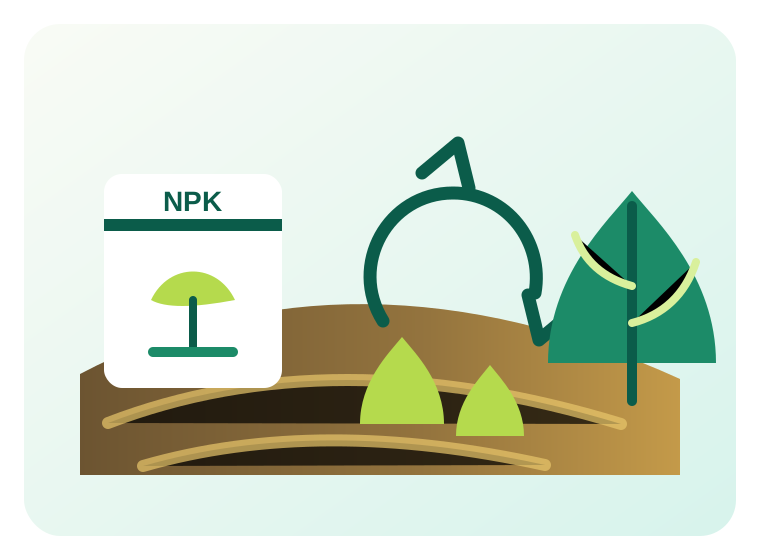
Bio fertiliser
Biogas projects should recover energy and soil value. Our nutrient rich bio fertiliser focus helps turn processed organic matter into an agricultural input with practical field value.
Why Proticks
From raw gas quality to membrane configuration, the process is shaped around your actual site conditions.
The website and the company story both point to the same outcome: cleaner gas, usable fertiliser, and stronger project economics.
Based in Jamnagar, Gujarat, with direct contact for industrial, agricultural, and waste-to-energy enquiries.
FAQ
Raw biogas flow, methane percentage, CO2 level, H2S, moisture, pressure, operating hours, feedstock type, and target gas application.
Membrane systems are modular, compact, and well suited for selective methane enrichment when designed around the correct gas quality and flow.
Yes. Proticks Greentech includes nutrient rich bio fertiliser in its circular resource recovery approach.
Contact
Share your site details, feedstock, raw gas flow, or project idea. We will help you identify the right next step.
PROTICKS GREENTECH PVT LTD PROTICKS, 16 - Elite Luxuria 4, Bedi Port Ring Road Jamnagar - 361006, Gujarat, India +91 99248 42155